RISCTOX Database
Search and consult detailed information about specific chemical substances.
Search other substances
Identification
- Name:
- dilead chromate dihydroxide
- Synonyms:
-
- DIHIDROXIDO CROMATO DE DIPLOMO
- CAS:
- 12017-86-6
- EC/EINECS:
- 234-628-3
- Molecular Formula:
- CrH2O6Pb
Black list
Substances particularly hazardous to the environment or health
CLASSIFICATION AND LABELLING (Regulation 1272/2008)
Symbols
-
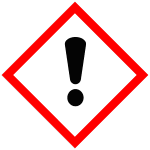
Acute toxicity (oral, dermal, inhalation
-
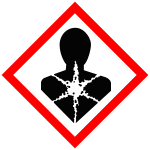
Respiratory sensitisation
-
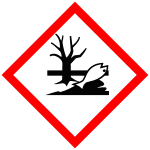
Hazardous to the aquatic environment
H Phrases
-
H350i : May cause cancer by inhalation.
Carc. (Cat. 1B) : Carcinogenicity
-
H317 : May cause an allergic skin reaction
Skin Sens. (Cat. 1) : Respiratory/skin sensitization
-
H400 : Very toxic to aquatic life
Aquatic Acute (Cat. 1) : Hazardous to the aquatic environment
-
H410 : Very toxic to aquatic life with long lasting effects
Aquatic Chronic (Cat. 1) : Hazardous to the aquatic environment
Notes
- R.1272-Note A
Specific health risks
As per IARC ?
Substances classified by the International Agency for Research on Cancer (IARC/WHO) according to their evidence of carcinogenicity in humans. Groups range from 1 (proven human carcinogen) to 4 (probably not carcinogenic to humans). The IARC classification is an international reference in occupational and environmental health.
Carcinogens and mutagens (IARC) ?
Substances classified as carcinogens or mutagens Category 2 under the CLP Regulation (GHS), bearing H351 and/or H341 phrases. These are substances suspected of causing cancer or heritable genetic mutations in humans.
Neurotoxic substances ?
Occupational Exposure Limits (OEL) ?
Daily exposure limit values (VLA-ED) published by the Spanish National Institute of Safety and Health at Work (INSST). They represent the average concentration of a chemical agent in the worker's breathing zone, measured or calculated in a time-weighted manner for an 8-hour daily working period.
Specific environmental risks
Environmental regulations
LPCIC (EPER)
Priority substances and specific pollutants within the EU water policy framework, established by the Water Framework Directive (2000/60/EC) and the Priority Substances Directive (2008/105/EC and amendments). Substances posing significant risk to European surface waters and subject to Environmental Quality Standards (EQS).
EPER Water ?
Substances from List 1 of Annex III of the IPPC Directive (integrated into the Industrial Emissions Directive 2010/75/EU). Atmospheric pollutants —including SO₂, NOx, heavy metals and organic compounds— that must be taken into account when setting emission limit values for IPPC installations.
EPER Air ?
Substances from List 2 of Annex III of the IPPC Directive (integrated into the Industrial Emissions Directive 2010/75/EU). Pollutants that may affect surface and groundwater bodies and must be considered in the integrated environmental authorisation of industrial installations.
ListMajor accident hazards (Seveso) ?
Hazardous substances listed in Annex I of the Seveso III Directive (Directive 2012/18/EU), transposed in Spain by Royal Decree 840/2015. Their presence in industrial establishments in quantities equal to or above established thresholds triggers obligations to implement major accident risk control measures.
ListRestriction/prohibition regulations
Substances under evaluation. PACT ?
Substances under active regulatory monitoring through ECHA's PACT (Public Activities Coordination Tool). Allows tracking which regulatory authorities are examining a substance and what potential regulatory actions are being considered (restriction, SVHC identification, harmonised classification, etc.).