RISCTOX Database
Search and consult detailed information about specific chemical substances.
Search other substances
Identification
- Name:
- Reaction products of: 4-nonylphenol, formaldehyde and dodecane-1-thiol
Black list
Substances particularly hazardous to the environment or health
CLASSIFICATION AND LABELLING (Regulation 1272/2008)
Symbols
-
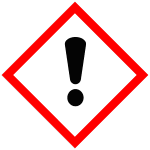
Acute toxicity (oral, dermal, inhalation
H Phrases
-
H317 : May cause an allergic skin reaction
Skin Sens. (Cat. 1) : Respiratory/skin sensitization
-
H413 : May cause long lasting harmful effects to aquatic life
Aquatic Chronic (Cat. 4) : Hazardous to the aquatic environment
Specific health risks
Specific environmental risks
Aquatic toxicity (Water Framework Directive) ?
Substances classified with acute aquatic toxicity under the CLP Regulation (H400 phrase, Aquatic Acute 1). They present an immediate hazard to aquatic organisms, and their use or discharge can cause rapid damage to aquatic ecosystems.
ListAtmospheric emissions ?
Substances subject to atmospheric emission limitations under the Industrial Emissions Directive (2010/75/EU) and its Spanish transposition. Includes pollutants regulated in industrial installation emission permits and best available technique reference documents (BAT/BREF).
ListEnvironmental regulations
LPCIC (EPER)
Priority substances and specific pollutants within the EU water policy framework, established by the Water Framework Directive (2000/60/EC) and the Priority Substances Directive (2008/105/EC and amendments). Substances posing significant risk to European surface waters and subject to Environmental Quality Standards (EQS).
EPER Water ?
Substances from List 1 of Annex III of the IPPC Directive (integrated into the Industrial Emissions Directive 2010/75/EU). Atmospheric pollutants —including SO₂, NOx, heavy metals and organic compounds— that must be taken into account when setting emission limit values for IPPC installations.
Restriction/prohibition regulations
Substances under evaluation. PACT ?
Substances under active regulatory monitoring through ECHA's PACT (Public Activities Coordination Tool). Allows tracking which regulatory authorities are examining a substance and what potential regulatory actions are being considered (restriction, SVHC identification, harmonised classification, etc.).