RISCTOX Database
Search and consult detailed information about specific chemical substances.
Search other substances
Identification
- Name:
- propylidynetrimethyl trimethacrylate
- Synonyms:
-
- ACIDO 2-METIL-2-PROPENOICO, 2-ETIL-2-[[(2-METIL-1-OXO-2-PROPENIL)OXI]METIL]-1,3-PROPANODIIL ESTER
- TRIMETILOLPROPANO TRIMETACRILATO
- 1,1,1-TRIMETILOLPROPANO TRIMETACRILATO
- TRIMETACRILATO DE 2-ETIL-2-(HIDROXIMETIL)-1,3-PROPANODIOL
- ATM 11
- ACRIESTER TMP
- BRN 5961805
- BLEMMER PTT
- CCRIS 530
- CHEMLINK 30
- CHEMLINK 3080
- HI-CROSS M
- ESTER LIGERO TMP
- TRIESTER DE ACIDO METACRILICO Y 1,1,1-TRIHIDROXIMETIL PROPANO
- MONOCIZER TD 1500
- NK ESTER M TMPT
- NK ESTER TMPT
- NSC 84261
- PTMA
- PTMA (VAN)
- PERKALINK 400
- PERKALINK 400-50D
- SR 350
- SARET 515
- SARTOMER 350
- SARTOMER SR 350
- TD 1500
- TD 1500 S
- TMPT (AGENTE RECIRCULATORIO)
- TRIMETANCRILATO DE TRIMETILOLPROPANO
- ACIDO METACRILICO, TRIESTER CON 2-ETIL-2-(HIDROXIMETIL)-1,3-PROPANODIOL (8CI)
- TRIMETILPROPILIDINA TRIMETACRILATO
- ACIDO METACRILICO, TRIESTER CON 2-ETIL-2-(HIDROXIMETIL)-1,3-PROPANODIOL
- CAS:
- 3290-92-4
- EC/EINECS:
- 221-950-4
- Molecular Formula:
- C18H26O6
CLASSIFICATION AND LABELLING (Regulation 1272/2008)
Symbols
-
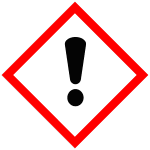
Acute toxicity (oral, dermal, inhalation
H Phrases
-
H319 : Causes serious eye irritation
Eye Irrit. (Cat. 2) : Serious eye damage/eye irritation
-
H335 : May cause respiratory irritation
STOT SE (Cat. 3) : Specific target organ toxicity - single exposure
-
H315 : Causes skin irritation
Skin Irrit. (Cat. 2) : Skin corrosion/irritation
Notes
- R.1272-Note A
Labelling
| Concentration | Labelling |
|---|---|
| C >= 10 % | STOT única, 3; H335 |
Specific environmental risks
Hazardous water substances (Germany) ?
Substances classified with chronic aquatic toxicity under the CLP Regulation (H410–H413 phrases, Aquatic Chronic categories 1 to 4). They pose a long-term hazard to aquatic organisms, even at low concentrations and through prolonged exposure.
Restriction/prohibition regulations
Substances under evaluation. PACT ?
Substances under active regulatory monitoring through ECHA's PACT (Public Activities Coordination Tool). Allows tracking which regulatory authorities are examining a substance and what potential regulatory actions are being considered (restriction, SVHC identification, harmonised classification, etc.).