RISCTOX Database
Search and consult detailed information about specific chemical substances.
Search other substances
Identification
- Name:
- chrysene
- CAS:
- 218-01-9
- EC/EINECS:
- 205-923-4
- Molecular Formula:
- C18H12
- Uses:
- molding sand
Black list
Substances particularly hazardous to the environment or health
CLASSIFICATION AND LABELLING (Regulation 1272/2008)
Symbols
-
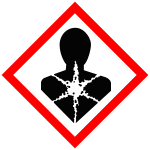
Respiratory sensitisation
-
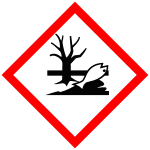
Hazardous to the aquatic environment
H Phrases
-
H350 : May cause cancer
Carc. (Cat. 1B) : Carcinogenicity
-
H341 : Suspected of causing genetic defects
Muta. (Cat. 2) : Germ cell mutagenicity
-
H400 : Very toxic to aquatic life
Aquatic Acute (Cat. 1) : Hazardous to the aquatic environment
-
H410 : Very toxic to aquatic life with long lasting effects
Aquatic Chronic (Cat. 1) : Hazardous to the aquatic environment
Specific health risks
As per IARC ?
Substances classified by the International Agency for Research on Cancer (IARC/WHO) according to their evidence of carcinogenicity in humans. Groups range from 1 (proven human carcinogen) to 4 (probably not carcinogenic to humans). The IARC classification is an international reference in occupational and environmental health.
Prohibited for breastfeeding workers ?
Chemical agents whose exposure is prohibited for breastfeeding workers under Royal Decree 298/2009 and Directive 92/85/EEC. Includes substances that may be transmitted through breast milk or that negatively affect milk production.
Prohibited for pregnant workers ?
Chemical agents whose exposure is prohibited for pregnant workers under Royal Decree 298/2009 (amendment of RD 39/1997) and Directive 92/85/EEC. Includes substances with proven risk of foetal harm, miscarriage or pregnancy complications.
As per other sources
Carcinogens and mutagens (IARC) ?
Substances classified as carcinogens or mutagens Category 2 under the CLP Regulation (GHS), bearing H351 and/or H341 phrases. These are substances suspected of causing cancer or heritable genetic mutations in humans.
Carcinogens (other sources) ?
Substances classified as carcinogens or mutagens Category 3 under the Dangerous Preparations Directive criteria (pre-CLP). Substances with limited evidence or indications of carcinogenicity or mutagenicity.
Neurotoxic substances ?
Specific environmental risks
Persistent bioaccumulative and toxic ?
Substances identified as Persistent, Bioaccumulative and Toxic (PBT) according to the criteria of Annex XIII of the REACH Regulation. They pose a special risk of accumulation in the environment and in the food chain.
Aquatic toxicity (Water Framework Directive) ?
Substances classified with acute aquatic toxicity under the CLP Regulation (H400 phrase, Aquatic Acute 1). They present an immediate hazard to aquatic organisms, and their use or discharge can cause rapid damage to aquatic ecosystems.
ListAir quality ?
Atmospheric pollutants that negatively affect air quality. Includes compounds contributing to tropospheric ozone formation, suspended particulate matter (PM), acid rain or other ambient air pollution phenomena.
ListAtmospheric emissions ?
Substances subject to atmospheric emission limitations under the Industrial Emissions Directive (2010/75/EU) and its Spanish transposition. Includes pollutants regulated in industrial installation emission permits and best available technique reference documents (BAT/BREF).
ListEnvironmental regulations
LPCIC (EPER)
Priority substances and specific pollutants within the EU water policy framework, established by the Water Framework Directive (2000/60/EC) and the Priority Substances Directive (2008/105/EC and amendments). Substances posing significant risk to European surface waters and subject to Environmental Quality Standards (EQS).
EPER Soil ?
Substances from List 3 of Annex III of the IPPC Directive (integrated into the Industrial Emissions Directive 2010/75/EU). Substances present in waste generated by IPPC installations that must be controlled and minimised within the framework of best available techniques.
ListMajor accident hazards (Seveso) ?
Hazardous substances listed in Annex I of the Seveso III Directive (Directive 2012/18/EU), transposed in Spain by Royal Decree 840/2015. Their presence in industrial establishments in quantities equal to or above established thresholds triggers obligations to implement major accident risk control measures.
ListRestriction/prohibition regulations
Restricted substances REACH ?
Substances listed in Annex XVII of the REACH Regulation (EC) No 1907/2006, subject to restrictions on their manufacture, placing on the market or use. Restrictions may be total or partial, limiting specific applications, maximum concentrations or user groups.
Limitations:
Without prejudice to the other parts of this Annex the following shall apply to entries 28 to 30: 1. Shall not be placed on the market, or used,
- as substances,
- as constituents of other substances, or,
- in mixtures, for supply to the general public when the individual concentration in the substance or mixture is equal to or greater than:
- either the relevant specific concentration limit specified in Part 3 of Annex VI to Regulation (EC) No 1272/2008, or,
- the relevant concentration specified in Directive 1999/45/EC where no specific concentration limit is set out in Part 3 of Annex VI to Regulation (EC) No 1272/2008.
Without prejudice to the implementation of other Community provisions relating to the classification, packaging and labelling of substances and mixtures, suppliers shall ensure before the placing on the market that the packaging of such substances and mixtures is marked visibly, legibly and indelibly as follows: ‘Restricted to professional users’.
2. By way of derogation, paragraph 1 shall not apply to:
(a) medicinal or veterinary products as defined by Directive 2001/82/EC and Directive 2001/83/ EC;
(b) cosmetic products as defined by Directive 76/ 768/EEC;
(c) the following fuels and oil products:
- motor fuels which are covered by Directive 98/70/EC,
- mineral oil products intended for use as fuel in mobile or fixed combustion plants,
- fuels sold in closed systems (e.g. liquid gas bottles); (d) artists’ paints covered by Directive 1999/45/ EC;
(e) the substances listed in Appendix 11, column 1, for the applications or uses listed in Appendix 11, column
2. Where a date is specified in column 2 of Appendix 11, the derogation shall apply until the said date.
Source: Regulation 1907/2006 (REACH). Annex XVII
Substances under evaluation. PACT ?
Substances under active regulatory monitoring through ECHA's PACT (Public Activities Coordination Tool). Allows tracking which regulatory authorities are examining a substance and what potential regulatory actions are being considered (restriction, SVHC identification, harmonised classification, etc.).