


RISCTOX Database
Search and consult detailed information about specific chemical substances.
Search other substances
Identification
- Name:
- Octanoic acid, pentadecafluoro-@pentadecafluorooctanoic acid@PFOA
- Synonyms:
-
- acido octanoico, pentadecafluoro
- acido perflurooctanoico
- CAS:
- 335-67-1
- EC/EINECS:
- 206-397-9
- Molecular Formula:
- C8-H-F15-O2
- Uses:
- pesticide
CLASSIFICATION AND LABELLING (Regulation 1272/2008)
Symbols
-
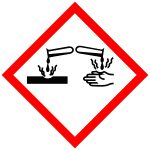
Corrosive to metals
-
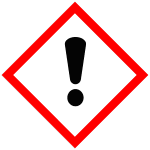
Acute toxicity (oral, dermal, inhalation
-
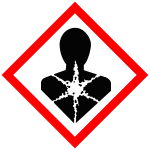
Respiratory sensitisation
Signal word
DangerH Phrases
-
H351 : Suspected of causing cancer
Carc. (Cat. 2) : Carcinogenicity
-
H360D : May damage the unborn child.
Repr. (Cat. 1B) : Reproductive toxicity
-
H362 : May cause harm to breast-fed children
Lact.,
-
H332 : Harmful if inhaled
Acute Tox. (Cat. 4) : Acute toxicity
-
H302 : Harmful if swallowed
Acute Tox. (Cat. 4) : Acute toxicity
-
H372 : Causes damage to organs through prolonged or repeated exposure
STOT RE 1
-
H318 : Causes serious eye damage
Eye Dam. (Cat. 1) : Serious eye damage/eye irritation
Specific health risks
Breast cancer ?
Substances classified with H362 phrase (may cause harm to breast-fed children). Toxic for reproduction due to effects on lactation or due to transmissibility through breast milk.
Prohibited for pregnant workers
Substances prohibited for pregnant workers
ListProhibited for breastfeeding workers
Substances prohibited for breastfeeding workers
ListSpecific environmental risks
Environmental regulations
LPCIC (EPER)
Priority substances and specific pollutants within the EU water policy framework, established by the Water Framework Directive (2000/60/EC) and the Priority Substances Directive (2008/105/EC and amendments). Substances posing significant risk to European surface waters and subject to Environmental Quality Standards (EQS).
EPER Water ?
Substances from List 1 of Annex III of the IPPC Directive (integrated into the Industrial Emissions Directive 2010/75/EU). Atmospheric pollutants —including SO₂, NOx, heavy metals and organic compounds— that must be taken into account when setting emission limit values for IPPC installations.
Restriction/prohibition regulations
Restricted substances under REACH ?
Substances listed in Annex XVII of the REACH Regulation (EC) No 1907/2006, subject to restrictions on their manufacture, placing on the market or use. Restrictions may be total or partial, limiting specific applications, maximum concentrations or user groups.
2. Shall not, from 4 July 2020, be used in the production of, or placed on the market in:
(a) another substance, as a constituent;
(b) a mixture;
(c) an article,
in a concentration equal to or above 25 ppb of PFOA including its salts or 1 000 ppb of one or a combination of PFOA-related substances.
3. Points 1 and 2 shall apply from:
(a) 4 July 2022 to:
(i) equipment used to manufacture semi-conductors;
(ii) latex printing inks.
(b) 4 July 2023 to:
(i) textiles for the protection of workers from risks to their health and safety;
(ii) membranes intended for use in medical textiles, filtration in water treatment, production processes and effluent treatment;
(iii) plasma nano-coatings.
(c) 4 July 2032 to medical devices other than implantable medical devices within the scope of Directive 93/42/EEC.
4. Points 1 and 2 shall not apply to any of the following:
(a) perfluorooctane sulfonic acid and its derivatives, which are listed in Part A of Annex I to Regulation (EC) No 850/2004;
(b) the manufacture of a substance where this occurs as an unavoidable by-product of the manufacture of fluorochemicals with a carbon chain equal to or shorter than 6 atoms;
(c) a substance that is to be used, or is used as a transported isolated intermediate, provided that the conditions in points (a) to (f) of Article 18(4) of this Regulation are met;
(d) a substance, constituent of another substance or mixture that is to be used, or is used:
(i) in the production of implantable medical devices within the scope of Directive 93/42/EEC;
(ii) in photographic coatings applied to films, papers or printing plates;
(iii) in photo-lithography processes for semiconductors or in etching processes for compound semiconductors;
(e) concentrated fire-fighting foam mixtures that were placed on the market before 4 July 2020 and are to be used, or are used in the production of other fire-fighting foam mixtures.
5. Point 2(b) shall not apply to fire-fighting foam mixtures which were:
(a) placed on the market before 4 July 2020; or
(b) produced in accordance with point 4(e), provided that, where they are used for training purposes, emissions to the environment are minimised and effluents collected are safely disposed of.
6. Point 2(c) shall not apply to:
(a) articles placed on the market before 4 July 2020;
(b) implantable medical devices produced in accordance with point 4(d)(i);
(c) articles coated with the photographic coatings referred to in point 4(d)(ii);
(d) semiconductors or compound semiconductors referred to in point 4(d)(iii).
REACH Candidates ?
Substances of Very High Concern (SVHC) identified by ECHA and included on the REACH Candidate List. These are substances with CMR, PBT, vPvB or endocrine disrupting properties liable to be included in Annex XIV (authorisation). Their inclusion generates notification obligations for articles containing them.
ListSubstances under PACT evaluation ?
Substances under active regulatory monitoring through ECHA's PACT (Public Activities Coordination Tool). Allows tracking which regulatory authorities are examining a substance and what potential regulatory actions are being considered (restriction, SVHC identification, harmonised classification, etc.).