RISCTOX Database
Search and consult detailed information about specific chemical substances.
Search other substances
Identification
- Name:
- nickel powder;
- Synonyms:
-
- níquel en polvo, diámetro de partícula < 1 mm
- CAS:
- 7440-02-0
- EC/EINECS:
- 231-111-4
- Uses:
- paint additive anticorrosive molding sand
Black list
Substances particularly hazardous to the environment or health
CLASSIFICATION AND LABELLING (Regulation 1272/2008)
Symbols
-
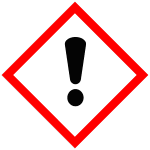
Acute toxicity (oral, dermal, inhalation
-
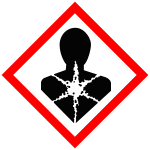
Respiratory sensitisation
H Phrases
-
H351 : Suspected of causing cancer
Carc. (Cat. 2) : Carcinogenicity
-
H372** : Causes damage to organs through prolonged or repeated exposure
STOT RE (Cat. 1) : Specific target organ toxicity - repeated exposure
-
H317 : May cause an allergic skin reaction
Skin Sens. (Cat. 1) : Respiratory/skin sensitization
-
H412 : Harmful to aquatic life with long lasting effects
Aquatic Chronic (Cat. 3) : Hazardous to the aquatic environment
Specific health risks
As per IARC ?
Substances classified by the International Agency for Research on Cancer (IARC/WHO) according to their evidence of carcinogenicity in humans. Groups range from 1 (proven human carcinogen) to 4 (probably not carcinogenic to humans). The IARC classification is an international reference in occupational and environmental health.
As per other sources
Carcinogens (other sources) ?
Substances classified as carcinogens or mutagens Category 3 under the Dangerous Preparations Directive criteria (pre-CLP). Substances with limited evidence or indications of carcinogenicity or mutagenicity.
Neurotoxic substances ?
Restriction/prohibition regulations
Restricted substances REACH ?
Substances listed in Annex XVII of the REACH Regulation (EC) No 1907/2006, subject to restrictions on their manufacture, placing on the market or use. Restrictions may be total or partial, limiting specific applications, maximum concentrations or user groups.
Limitations: 1. Shall not be used: (a) in any post assemblies which are inserted into pierced ears and other pierced parts of the human body unless the rate of nickel release from such post assemblies is less than 0,2 μg/cm 2 /week (migration limit); (b) in articles intended to come into direct and prolonged contact with the skin such as: — earrings, — necklaces, bracelets and chains, anklets, finger rings, — wrist-watch cases, watch straps and tighteners, — rivet buttons, tighteners, rivets, zippers and metal marks, when these are used in garments, if the rate of nickel release from the parts of these articles coming into direct and prolonged contact with the skin is greater than 0,5 μg/cm 2 /week. (c) in articles referred to in point (b) where these have a non-nickel coating unless such coating is sufficient to ensure that the rate of nickel release from those parts of such articles coming into direct and prolonged contact with the skin will not exceed 0,5 μg/cm 2 /week for a period of at least two years of normal use of the article. 2. Articles which are the subject of paragraph 1 shall not be placed on the market unless they conform to the requirements set out in that paragraph. 3. The standards adopted by the European Committee for Standardisation (CEN) shall be used as the test methods for demonstrating the conformity of articles to paragraphs 1 and 2.
Source: Regulation 1907/2006 (REACH). Annex XVII