RISCTOX Database
Search and consult detailed information about specific chemical substances.
Search other substances
Identification
- Name:
- 3-(4-isopropylphenyl)-1,1-dimethylurea
- Synonyms:
-
- ISOPROTURON
- CAS:
- 34123-59-6
- EC/EINECS:
- 251-835-4
- Molecular Formula:
- C12H18N2O
- Uses:
- pesticide
Black list
Substances particularly hazardous to the environment or health
CLASSIFICATION AND LABELLING (Regulation 1272/2008)
Symbols
-
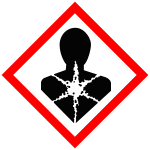
Respiratory sensitisation
-
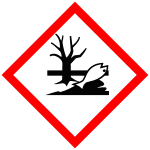
Hazardous to the aquatic environment
H Phrases
-
H351 : Suspected of causing cancer
Carc. (Cat. 2) : Carcinogenicity
-
H400 : Very toxic to aquatic life
Aquatic Acute (Cat. 1) : Hazardous to the aquatic environment
-
H410 : Very toxic to aquatic life with long lasting effects
Aquatic Chronic (Cat. 1) : Hazardous to the aquatic environment
Labelling
| Concentration | Labelling |
|---|---|
| M = 10 |
Specific health risks
Specific environmental risks
Aquatic toxicity (Water Framework Directive) ?
Substances classified with acute aquatic toxicity under the CLP Regulation (H400 phrase, Aquatic Acute 1). They present an immediate hazard to aquatic organisms, and their use or discharge can cause rapid damage to aquatic ecosystems.
ListHazardous water substances (Germany) ?
Substances classified with chronic aquatic toxicity under the CLP Regulation (H410–H413 phrases, Aquatic Chronic categories 1 to 4). They pose a long-term hazard to aquatic organisms, even at low concentrations and through prolonged exposure.
Environmental regulations
LPCIC (EPER)
Priority substances and specific pollutants within the EU water policy framework, established by the Water Framework Directive (2000/60/EC) and the Priority Substances Directive (2008/105/EC and amendments). Substances posing significant risk to European surface waters and subject to Environmental Quality Standards (EQS).
EPER Soil ?
Substances from List 3 of Annex III of the IPPC Directive (integrated into the Industrial Emissions Directive 2010/75/EU). Substances present in waste generated by IPPC installations that must be controlled and minimised within the framework of best available techniques.
ListMajor accident hazards (Seveso) ?
Hazardous substances listed in Annex I of the Seveso III Directive (Directive 2012/18/EU), transposed in Spain by Royal Decree 840/2015. Their presence in industrial establishments in quantities equal to or above established thresholds triggers obligations to implement major accident risk control measures.
ListRestriction/prohibition regulations
Substances under evaluation. PACT ?
Substances under active regulatory monitoring through ECHA's PACT (Public Activities Coordination Tool). Allows tracking which regulatory authorities are examining a substance and what potential regulatory actions are being considered (restriction, SVHC identification, harmonised classification, etc.).
Authorized Pesticide ?
Active substances approved for use in plant protection products (agricultural pesticides) in the European Union under Regulation (EC) No 1107/2009. Includes herbicides, fungicides, insecticides, acaricides and other crop protection agents with current European-level approval.
Banned biocides ?
Active substances whose approval for biocidal use has been denied or not renewed under Regulation (EU) No 528/2012 on biocidal products. They may not be placed on the market or used as active substances in biocidal products in the European Union.