

RISCTOX Database
Search and consult detailed information about specific chemical substances.
Search other substances
Identification
- Name:
- barium bis[2-chloro-5-[(2-hydroxy-1-naphthyl)azo]toluene-4-sulphonate];C.1. Pigment Trf 53:1
- Name (English):
- barium bis[2-chloro-5-[(2-hydroxy-1-naphthyl)azo]toluene-4-sulphonate];C.1. Pigment Trf 53:1
- Synonyms:
-
- C.I. pigmento rojo 53 (2:1)
- rojo brillante
- D & C rojo Nº. 9
- sal de acido 5-cloro-2-[(2-hidroxi-1-naftalenil)azo]-4-metil-bencenosulfonico y bario (2:1)
- CAS:
- 5160-02-1
- EC/EINECS:
- 225-935-3
- Molecular Formula:
- C17H13ClN2O4S.1/2Ba
CLASSIFICATION AND LABELLING (Regulation 1272/2008)
Symbols
-
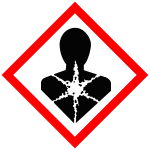
Respiratory sensitisation
Signal word
WarningH Phrases
-
H351 : Suspected of causing cancer
Carc. (Cat. 2) : Carcinogenicity
Labelling
| Concentration | Labelling |
|---|---|
| C>=1% | Xn: R20/22 |
| * |
Specific health risks
Carcinogens (other sources) ?
Substances classified as carcinogens or mutagens Category 3 under the Dangerous Preparations Directive criteria (pre-CLP). Substances with limited evidence or indications of carcinogenicity or mutagenicity.
According to IARC ?
Substances classified as carcinogens or mutagens Category 2 under the CLP Regulation (GHS), bearing H351 and/or H341 phrases. These are substances suspected of causing cancer or heritable genetic mutations in humans.
Restriction/prohibition regulations
Substances under CoRAP evaluation ?
Substances included in the Community Rolling Action Plan (CoRAP) of the REACH Regulation. These are substances selected for evaluation by EU Member States due to indications of risk to human health or the environment, with the aim of clarifying whether regulatory action is warranted.
Substances under PACT evaluation ?
Substances under active regulatory monitoring through ECHA's PACT (Public Activities Coordination Tool). Allows tracking which regulatory authorities are examining a substance and what potential regulatory actions are being considered (restriction, SVHC identification, harmonised classification, etc.).