

RISCTOX Database
Search and consult detailed information about specific chemical substances.
Search other substances
Identification
- Name:
- heptachlor epoxide@ Heptachlor-epoxide
- Synonyms:
-
- 2,3-EPOXI-1,4,5,6,7,8,8-HEPTACLORO-3A,4,7,7A-TETRAHIDRO-4,7-METANOINDANO
- CAS:
- 1024-57-3
- EC/EINECS:
- 213-831-0
- Molecular Formula:
- C10H5Cl7O
- Uses:
- pesticide cutting fluid
Black list
Substances particularly hazardous to the environment or health
CLASSIFICATION AND LABELLING (Regulation 1272/2008)
Symbols
-
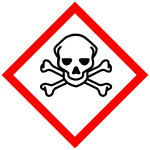
Acute toxicity (oral, dermal, inhalation)
-

Respiratory sensitisation
-

Hazardous to the aquatic environment
Signal word
DangerH Phrases
-
H351 : Suspected of causing cancer
Carc. (Cat. 2) : Carcinogenicity
-
H301 : Toxic if swallowed
Acute Tox. (Cat. 3 *) : Acute toxicity
-
H400 : Very toxic to aquatic life
Aquatic Acute (Cat. 1) : Hazardous to the aquatic environment
-
H410 : Very toxic to aquatic life with long lasting effects
Aquatic Chronic (Cat. 1) : Hazardous to the aquatic environment
-
H373 : May cause damage to organs through prolonged or repeated exposure
STOT RE (Cat. 2 *) : Specific target organ toxicity - repeated exposure
Specific health risks
Carcinogens (other sources) ?
Substances classified as carcinogens or mutagens Category 3 under the Dangerous Preparations Directive criteria (pre-CLP). Substances with limited evidence or indications of carcinogenicity or mutagenicity.
Endocrine disruptors ?
Occupational Exposure Limits (OEL) ?
Daily exposure limit values (VLA-ED) published by the Spanish National Institute of Safety and Health at Work (INSST). They represent the average concentration of a chemical agent in the worker's breathing zone, measured or calculated in a time-weighted manner for an 8-hour daily working period. (https://www.insst.es/valores-limites-de-exposicion)
Specific environmental risks
Persistent bioaccumulative and toxic ?
Substances identified as Persistent, Bioaccumulative and Toxic (PBT) according to the criteria of Annex XIII of the REACH Regulation. They pose a special risk of accumulation in the environment and in the food chain.
Soil contaminants ?
Substances identified as soil contaminants under Spanish and European environmental regulations. Includes substances capable of persisting in soil, bioaccumulating in the terrestrial food chain, and affecting soil ecosystems and groundwater.
ListAtmospheric emissions ?
Substances subject to atmospheric emission limitations under the Industrial Emissions Directive (2010/75/EU) and its Spanish transposition. Includes pollutants regulated in industrial installation emission permits and best available technique reference documents (BAT/BREF).
ListRestriction/prohibition regulations
Major accident hazards (Seveso) ?
Hazardous substances listed in Annex I of the Seveso III Directive (Directive 2012/18/EU), transposed in Spain by Royal Decree 840/2015. Their presence in industrial establishments in quantities equal to or above established thresholds triggers obligations to implement major accident risk control measures.
List