


RISCTOX Database
Search and consult detailed information about specific chemical substances.
Search other substances
Identification
- Name:
- m-bis(2,3-epoxypropoxy)benzene
- Synonyms:
-
- DIGLICOIDIL RESORCINOL ETER
- DIGLICIDIL RESORCINOL ETER
- 1,3-bis(2,3-EPOXIPROPOXI)BENCENO
- CAS:
- 101-90-6
- EC/EINECS:
- 202-987-5
- Molecular Formula:
- C12H14O4
- International Chemical Safety Card (ICSC):
- 0193
Black list
Substances particularly hazardous to the environment or health
CLASSIFICATION AND LABELLING (Regulation 1272/2008)
Symbols
-
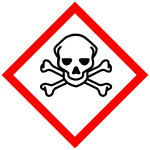
Acute toxicity (oral, dermal, inhalation)
-
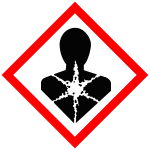
Respiratory sensitisation
Signal word
WarningH Phrases
-
H350 : May cause cancer
Carc. (Cat. 1B) : Carcinogenicity
-
H341 : Suspected of causing genetic defects
Muta. (Cat. 2) : Germ cell mutagenicity
-
H311 : Toxic in contact with skin
Acute Tox. (Cat. 3) : Acute toxicity
-
H302 : Harmful if swallowed
Acute Tox. (Cat. 4) : Acute toxicity
-
H315 : Causes skin irritation
Skin Irrit. (Cat. 2) : Skin corrosion/irritation
-
H319 : Causes serious eye irritation
Eye Irrit. (Cat. 2) : Serious eye damage/eye irritation
-
H317 : May cause an allergic skin reaction
Skin Sens. (Cat. 1) : Respiratory/skin sensitization
-
H412 : Harmful to aquatic life with long lasting effects
Acuático crónico, 3
Labelling
| Concentration | Labelling |
|---|---|
| ATE=300mg/kg bw | Dermal |
| ATE=500 mg/kg bw' | Oral |
Specific health risks
Carcinogens (other sources) ?
Substances classified as carcinogens or mutagens Category 3 under the Dangerous Preparations Directive criteria (pre-CLP). Substances with limited evidence or indications of carcinogenicity or mutagenicity.
According to IARC ?
Substances classified as carcinogens or mutagens Category 2 under the CLP Regulation (GHS), bearing H351 and/or H341 phrases. These are substances suspected of causing cancer or heritable genetic mutations in humans.
Restriction/prohibition regulations
REACH sensitisers ?
Substances identified as respiratory or skin sensitisers under the REACH Regulation. Includes substances that, without necessarily having a CLP classification, have been assessed by ECHA as potentially allergenic in occupational exposure contexts.
ListSubstances under PACT evaluation ?
Substances under active regulatory monitoring through ECHA's PACT (Public Activities Coordination Tool). Allows tracking which regulatory authorities are examining a substance and what potential regulatory actions are being considered (restriction, SVHC identification, harmonised classification, etc.).