RISCTOX Database
Search and consult detailed information about specific chemical substances.
Search other substances
Identification
- Name:
- 4,4'-methylenediphenyl diisocyanate, diphenylmethane-4,4'-diisocyanate@2,2'-methylenediphenyl diisocyanate@ Diphenylmethane-2,2'-diisocyanate@ o-(p-isocyanatobenzyl)phenyl isocyanate@Diphenylmethane-2,4'-diisocyanate@Methylenediphenyl diisocyanate@ MDI@ 4,4´-MDI
- Name (English):
- 4,4'-methylenediphenyl diisocyanate, diphenylmethane-4,4'-diisocyanate@2,2'-methylenediphenyl diisocyanate@ Diphenylmethane-2,2'-diisocyanate@ o-(p-isocyanatobenzyl)phenyl isocyanate@Diphenylmethane-2,4'-diisocyanate@Methylenediphenyl diisocyanate@ MDI@ 4,4´-MDI
- Synonyms:
-
- 4,4'-diisocianato de difenilmetano
- 4,4´-metilen-bis-fenil isocianato
- diisocianato de difenilmetano
- 4,4'-metilenodifenil diisocianato
- metileno difenileno diisocianato
- diisocianato de 2,2'-metilendifenilo
- diisocianato de 2,2'-difenilmetano
- diisocianato de metilendifenilo
- diisocianato de 2,4'-difenilmetano
- isocianato de o-(p-isocianatobencil)fenilo
- CAS:
- 101-68-8
- EC/EINECS:
- 202-966-0
- Molecular Formula:
- C15H10N2O2
- International Chemical Safety Card (ICSC):
- 0298
- Uses:
- adhesive paint coating agent additive varnish hardener foaming agent binder binder elastomer
Black list
Substances particularly hazardous to the environment or health
CLASSIFICATION AND LABELLING (Regulation 1272/2008)
Symbols
-
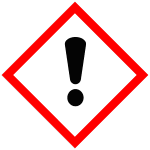
Acute toxicity (oral, dermal, inhalation
-
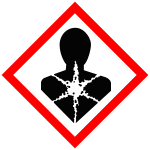
Respiratory sensitisation
H Phrases
-
H351 : Suspected of causing cancer
Carc. (Cat. 2) : Carcinogenicity
-
H332 : Harmful if inhaled
Acute Tox. (Cat. 4 *) : Acute toxicity
-
H373** : May cause damage to organs through prolonged or repeated exposure
STOT RE (Cat. 2 *) : Specific target organ toxicity - repeated exposure
-
H319 : Causes serious eye irritation
Eye Irrit. (Cat. 2) : Serious eye damage/eye irritation
-
H335 : May cause respiratory irritation
STOT SE (Cat. 3) : Specific target organ toxicity - single exposure
-
H315 : Causes skin irritation
Skin Irrit. (Cat. 2) : Skin corrosion/irritation
-
H334 : May cause allergy or asthma symptoms or breathing difficulties if inhaled
Resp. Sens. (Cat. 1) : Respiratory/skin sensitization
-
H317 : May cause an allergic skin reaction
Skin Sens. (Cat. 1) : Respiratory/skin sensitization
Notes
- R.1272-Note C
- R.1272-Note 2
Labelling
| Concentration | Labelling |
|---|---|
| C >= 5 % | Irrit. oc., 2; H319 |
| C >= 5 % | Irrit. cut., 2; H315 |
| C >= 0,1 % | Sens. resp., 1; H334 |
| C >= 5 % | STOT única, 3; H335 |
Specific health risks
As per IARC ?
Substances classified by the International Agency for Research on Cancer (IARC/WHO) according to their evidence of carcinogenicity in humans. Groups range from 1 (proven human carcinogen) to 4 (probably not carcinogenic to humans). The IARC classification is an international reference in occupational and environmental health.
As per other sources
Carcinogens and mutagens (IARC) ?
Substances classified as carcinogens or mutagens Category 2 under the CLP Regulation (GHS), bearing H351 and/or H341 phrases. These are substances suspected of causing cancer or heritable genetic mutations in humans.
Occupational Exposure Limits (OEL) ?
Daily exposure limit values (VLA-ED) published by the Spanish National Institute of Safety and Health at Work (INSST). They represent the average concentration of a chemical agent in the worker's breathing zone, measured or calculated in a time-weighted manner for an 8-hour daily working period.
Specific environmental risks
Volatile organic compounds ?
Volatile Organic Compounds (VOCs) regulated by Directive 1999/13/EC on the limitation of VOC emissions from certain activities, and by Royal Decrees 117/2003 and 227/2006. Substances contributing to tropospheric ozone formation that are subject to emission limits in industrial activities.
ListEnvironmental regulations
LPCIC (EPER)
Priority substances and specific pollutants within the EU water policy framework, established by the Water Framework Directive (2000/60/EC) and the Priority Substances Directive (2008/105/EC and amendments). Substances posing significant risk to European surface waters and subject to Environmental Quality Standards (EQS).
Restriction/prohibition regulations
Restricted substances REACH ?
Substances listed in Annex XVII of the REACH Regulation (EC) No 1907/2006, subject to restrictions on their manufacture, placing on the market or use. Restrictions may be total or partial, limiting specific applications, maximum concentrations or user groups.
Limitations: 1. Shall not be placed on the market after 27 December 2010, as a constituent of mixtures in concentrations equal to or greater than 0,1 % by weight of MDI for supply to the general public, unless suppliers shall ensure before the placing on the market that the packaging: (a) contains protective gloves which comply with the requirements of Council Directive 89/686/EEC (*******); (b) is marked visibly, legibly and indelibly as follows, and without prejudice to other Community legislation concerning the classification, packaging and labelling of substances and mixtures: ‘— Persons already sensitised to diisocyanates may develop allergic reactions when using this product. — Persons suffering from asthma, eczema or skin problems should avoid contact, including dermal contact, with this product. — This product should not be used under conditions of poor ventilation unless a protective mask with an appropriate gas filter (i.e. type A1 according to standard EN 14387) is used.’ 2. By way of derogation, paragraph 1(a) shall not apply to hot melt adhesives. (*******) OJ L 399, 30.12.1989, p. 18.
Source: Regulation 1907/2006 (REACH). Annex XVII
Substances under evaluation. CoRAP ?
Substances included in the Community Rolling Action Plan (CoRAP) of the REACH Regulation. These are substances selected for evaluation by EU Member States due to indications of risk to human health or the environment, with the aim of clarifying whether regulatory action is warranted.
Substances under evaluation. PACT ?
Substances under active regulatory monitoring through ECHA's PACT (Public Activities Coordination Tool). Allows tracking which regulatory authorities are examining a substance and what potential regulatory actions are being considered (restriction, SVHC identification, harmonised classification, etc.).