
RISCTOX Database
Search and consult detailed information about specific chemical substances.
Search other substances
Identification
- Name:
- N,N-dimethylacetamide
- CAS:
- 127-19-5
- EC/EINECS:
- 204-826-4
- Molecular Formula:
- C4H9NO
- International Chemical Safety Card (ICSC):
- 0259
- Uses:
- solvent
CLASSIFICATION AND LABELLING (Regulation 1272/2008)
Symbols
-
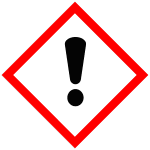
Acute toxicity (oral, dermal, inhalation
-
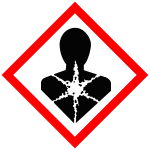
Respiratory sensitisation
Signal word
DangerH Phrases
-
H360D : May damage the unborn child.
Repr. (Cat. 1B) : Reproductive toxicity
-
H332 : Harmful if inhaled
Acute Tox. (Cat. 4*) : Acute toxicity
-
H312 : Harmful in contact with skin
Acute Tox. (Cat. 4*) : Acute toxicity
Labelling
| Concentration | Labelling |
|---|---|
| C >= 5 % | Repr. Cat. 2; R61 |
Specific health risks
Occupational Exposure Limits (OEL) ?
Daily exposure limit values (VLA-ED) published by the Spanish National Institute of Safety and Health at Work (INSST). They represent the average concentration of a chemical agent in the worker's breathing zone, measured or calculated in a time-weighted manner for an 8-hour daily working period. (https://www.insst.es/valores-limites-de-exposicion)
VLA-ED
36 mg/m3
10 ppm
VLA-EC
72 mg/m3
20 ppm
Posible contribución importante a la carga corporal total por exposición dérmica
Biological Exposure Indices (BEI) ?
Biological limit values (VLB) published by the Spanish National Institute of Safety and Health at Work (INSST). Reference values for assessing the risk of chemical agents by measuring them or their metabolites in biological matrices (blood, urine, exhaled air) of exposed workers.
IB: N-Metilacetamida en orina
30 mg/g creatinina
Prohibited for pregnant workers
Substances prohibited for pregnant workers
ListRestriction/prohibition regulations
Restricted substances under REACH ?
Substances listed in Annex XVII of the REACH Regulation (EC) No 1907/2006, subject to restrictions on their manufacture, placing on the market or use. Restrictions may be total or partial, limiting specific applications, maximum concentrations or user groups.
1. Shall not be placed on the market as a substance on its own, as a constituent of other substances, or in mixtures in a concentration equal to or greater than 0,3 % after 23 December 2026 unless manufacturers, importers and downstream users have included in the relevant chemical safety reports and safety data sheets, derived no-effect levels (DNELs) relating to exposure of workers of 13 mg/m3 for long-term exposure by inhalation and 1,8 mg/kg bw/day for long-term dermal exposure. 2. Shall not be manufactured, or used, as a substance on its own, as a constituent of other substances, or in mixtures in a concentration equal to or greater than 0,3 % after 23 December 2026 unless manufacturers and downstream users take the appropriate risk management measures and provide the appropriate operational conditions to ensure that exposure of workers is below the DNELs specified in paragraph 1. 3. By way of derogation from paragraphs 1 and 2, the obligations laid down therein shall apply from 23 June 2029 in relation to placing on the market for use, or use, as a solvent in the production of man-made fibres.
REACH Candidates ?
Substances of Very High Concern (SVHC) identified by ECHA and included on the REACH Candidate List. These are substances with CMR, PBT, vPvB or endocrine disrupting properties liable to be included in Annex XIV (authorisation). Their inclusion generates notification obligations for articles containing them.
ListMajor accident hazards (Seveso) ?
Hazardous substances listed in Annex I of the Seveso III Directive (Directive 2012/18/EU), transposed in Spain by Royal Decree 840/2015. Their presence in industrial establishments in quantities equal to or above established thresholds triggers obligations to implement major accident risk control measures.
ListSubstances under PACT evaluation ?
Substances under active regulatory monitoring through ECHA's PACT (Public Activities Coordination Tool). Allows tracking which regulatory authorities are examining a substance and what potential regulatory actions are being considered (restriction, SVHC identification, harmonised classification, etc.).
Commission
RMOA
CMR