

RISCTOX Database
Search and consult detailed information about specific chemical substances.
Search other substances
Identification
- Name:
- Octanoic acid, pentadecafluoro-, ammonium salt@ammonium pentadecafluorooctanoate@APFO
- Synonyms:
-
- perfluorooctanoato de amonio
- acido octanoico, pentadecafluoro, sal de amonio
- perfluoroctanoato amonico
- CAS:
- 3825-26-1
- EC/EINECS:
- 223-320-4
- Molecular Formula:
- C8-H-F15-O2 .H3-N
CLASSIFICATION AND LABELLING (Regulation 1272/2008)
Symbols
-
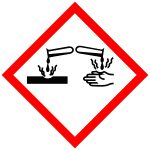
Corrosive to metals
-
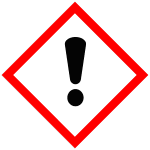
Acute toxicity (oral, dermal, inhalation
-
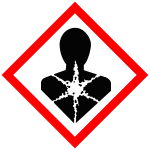
Respiratory sensitisation
Signal word
DangerH Phrases
-
H351 : Suspected of causing cancer
Carc. (Cat. 2) : Carcinogenicity
-
H360D : May damage the unborn child.
Repr. (Cat. 1B) : Reproductive toxicity
-
H362 : May cause harm to breast-fed children
Lact.,
-
H332 : Harmful if inhaled
Acute Tox. (Cat. 4) : Acute toxicity
-
H302 : Harmful if swallowed
Acute Tox. (Cat. 4) : Acute toxicity
-
H372 : Causes damage to organs through prolonged or repeated exposure
STOT RE 1
-
H318 : Causes serious eye damage
Les. oc.,1
Specific health risks
Carcinogens (other sources) ?
Substances classified as carcinogens or mutagens Category 3 under the Dangerous Preparations Directive criteria (pre-CLP). Substances with limited evidence or indications of carcinogenicity or mutagenicity.
Occupational Exposure Limits (OEL) ?
Daily exposure limit values (VLA-ED) published by the Spanish National Institute of Safety and Health at Work (INSST). They represent the average concentration of a chemical agent in the worker's breathing zone, measured or calculated in a time-weighted manner for an 8-hour daily working period. (https://www.insst.es/valores-limites-de-exposicion)
Prohibited for pregnant workers
Substances prohibited for pregnant workers
ListProhibited for breastfeeding workers
Substances prohibited for breastfeeding workers
ListEnvironmental regulations
LPCIC (EPER)
Priority substances and specific pollutants within the EU water policy framework, established by the Water Framework Directive (2000/60/EC) and the Priority Substances Directive (2008/105/EC and amendments). Substances posing significant risk to European surface waters and subject to Environmental Quality Standards (EQS).
EPER Water ?
Substances from List 1 of Annex III of the IPPC Directive (integrated into the Industrial Emissions Directive 2010/75/EU). Atmospheric pollutants —including SO₂, NOx, heavy metals and organic compounds— that must be taken into account when setting emission limit values for IPPC installations.
Restriction/prohibition regulations
REACH Candidates ?
Substances of Very High Concern (SVHC) identified by ECHA and included on the REACH Candidate List. These are substances with CMR, PBT, vPvB or endocrine disrupting properties liable to be included in Annex XIV (authorisation). Their inclusion generates notification obligations for articles containing them.
ListSubstances under PACT evaluation ?
Substances under active regulatory monitoring through ECHA's PACT (Public Activities Coordination Tool). Allows tracking which regulatory authorities are examining a substance and what potential regulatory actions are being considered (restriction, SVHC identification, harmonised classification, etc.).