RISCTOX Database
Search and consult detailed information about specific chemical substances.
Search other substances
Identification
- Name:
- dodecachloropentacyclo[5.2.1.02,6.03,9.05,8]decane@mirex@Hexachloropentadiene dimer@Dechlorane@1,1a,2,2,3,3a,4,5,5,5a,5b,6-Dodecachloro-octahydro-1,3,4-metheno-1H-cyclbuta[cd]pentalene@Perchloropentacyclodecane@CG-1283@1,2,3,4,5,5-Hexachloro-1,3-cyclopentadiene dimer@Hexachlorocyclopentadiene dimer@Dodecachlorooctahydro-1,3,4-metheno-2H-cyclobuta(c,d)pentalene@Dodecachloropentacyclodecane@GC 1283@HRS 1276@Perchlorodihomocubane@Dodecachlorooctahydro-1,3,4-metheno-1H-cyclobuta(c)pentalene@Bichlorendo@Dechlorane 4070@Ferriamicide@Cyclopentadiene, 1,2,3,4,5,5-hexachloro-, dimer@Metheno-1H-cyclobuta(cd)pentalene, 1,1a,2,2,3,3a,4,5,5,5a,5b,6-dodecachlorooctahydro-
- Name (English):
- dodecachloropentacyclo[5.2.1.02,6.03,9.05,8]decane@mirex@Hexachloropentadiene dimer@Dechlorane@1,1a,2,2,3,3a,4,5,5,5a,5b,6-Dodecachloro-octahydro-1,3,4-metheno-1H-cyclbuta[cd]pentalene@Perchloropentacyclodecane@CG-1283@1,2,3,4,5,5-Hexachloro-1,3-cyclopentadiene dimer@Hexachlorocyclopentadiene dimer@Dodecachlorooctahydro-1,3,4-metheno-2H-cyclobuta(c,d)pentalene@Dodecachloropentacyclodecane@GC 1283@HRS 1276@Perchlorodihomocubane@Dodecachlorooctahydro-1,3,4-metheno-1H-cyclobuta(c)pentalene@Bichlorendo@Dechlorane 4070@Ferriamicide@Cyclopentadiene, 1,2,3,4,5,5-hexachloro-, dimer@Metheno-1H-cyclobuta(cd)pentalene, 1,1a,2,2,3,3a,4,5,5,5a,5b,6-dodecachlorooctahydro-
- Synonyms:
-
- DODECACLOROPENTACICLO[5.2.1.0(2,6).0(3,9).0(5,8)]DECANO
- CAS:
- 2385-85-5
- EC/EINECS:
- 219-196-6
- Molecular Formula:
- C10Cl12
- Uses:
- pesticide biocide pesticide flame retardant
Black list
Substances particularly hazardous to the environment or health
CLASSIFICATION AND LABELLING (Regulation 1272/2008)
Symbols
-

Acute toxicity (oral, dermal, inhalation
-
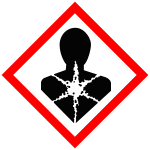
Respiratory sensitisation
-
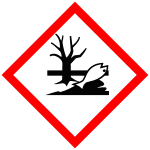
Hazardous to the aquatic environment
H Phrases
-
H351 : Suspected of causing cancer
Carc. (Cat. 2) : Carcinogenicity
-
H361fd : Suspected of damaging fertility. Suspected of damaging the unborn child.
Repr. (Cat. 2) : Reproductive toxicity
-
H362 : May cause harm to breast-fed children
Lact. : Reproductive toxicity
-
H312 : Harmful in contact with skin
Acute Tox. (Cat. 4 *) : Acute toxicity
-
H302 : Harmful if swallowed
Acute Tox. (Cat. 4 *) : Acute toxicity
-
H400 : Very toxic to aquatic life
Aquatic Acute (Cat. 1) : Hazardous to the aquatic environment
-
H410 : Very toxic to aquatic life with long lasting effects
Aquatic Chronic (Cat. 1) : Hazardous to the aquatic environment
Specific health risks
As per IARC ?
Substances classified by the International Agency for Research on Cancer (IARC/WHO) according to their evidence of carcinogenicity in humans. Groups range from 1 (proven human carcinogen) to 4 (probably not carcinogenic to humans). The IARC classification is an international reference in occupational and environmental health.
As per other sources
Carcinogens and mutagens (IARC) ?
Substances classified as carcinogens or mutagens Category 2 under the CLP Regulation (GHS), bearing H351 and/or H341 phrases. These are substances suspected of causing cancer or heritable genetic mutations in humans.
Carcinogens (other sources) ?
Substances classified as carcinogens or mutagens Category 3 under the Dangerous Preparations Directive criteria (pre-CLP). Substances with limited evidence or indications of carcinogenicity or mutagenicity.
Endocrine disruptors ?
Prohibited for breastfeeding workers
Substances prohibited for breastfeeding workers
ListSpecific environmental risks
Persistent organic pollutants ?
Substances identified as persistent organic pollutants
Persistent bioaccumulative and toxic ?
Substances identified as Persistent, Bioaccumulative and Toxic (PBT) according to the criteria of Annex XIII of the REACH Regulation. They pose a special risk of accumulation in the environment and in the food chain.
Atmospheric emissions ?
Substances subject to atmospheric emission limitations under the Industrial Emissions Directive (2010/75/EU) and its Spanish transposition. Includes pollutants regulated in industrial installation emission permits and best available technique reference documents (BAT/BREF).
ListEnvironmental regulations
LPCIC (EPER)
Priority substances and specific pollutants within the EU water policy framework, established by the Water Framework Directive (2000/60/EC) and the Priority Substances Directive (2008/105/EC and amendments). Substances posing significant risk to European surface waters and subject to Environmental Quality Standards (EQS).
EPER Soil ?
Substances from List 3 of Annex III of the IPPC Directive (integrated into the Industrial Emissions Directive 2010/75/EU). Substances present in waste generated by IPPC installations that must be controlled and minimised within the framework of best available techniques.
ListMajor accident hazards (Seveso) ?
Hazardous substances listed in Annex I of the Seveso III Directive (Directive 2012/18/EU), transposed in Spain by Royal Decree 840/2015. Their presence in industrial establishments in quantities equal to or above established thresholds triggers obligations to implement major accident risk control measures.
ListRestriction/prohibition regulations
Substances under evaluation. PACT ?
Substances under active regulatory monitoring through ECHA's PACT (Public Activities Coordination Tool). Allows tracking which regulatory authorities are examining a substance and what potential regulatory actions are being considered (restriction, SVHC identification, harmonised classification, etc.).