

RISCTOX Database
Search and consult detailed information about specific chemical substances.
Search other substances
Identification
- Name:
- cobalt oxide
- Synonyms:
-
- OXIDO DE COBALTO (II)
- CAS:
- 1307-96-6
- EC/EINECS:
- 215-154-6
- Molecular Formula:
- CoO
Black list
Substances particularly hazardous to the environment or health
CLASSIFICATION AND LABELLING (Regulation 1272/2008)
Symbols
-
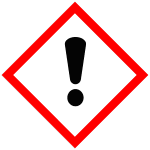
Acute toxicity (oral, dermal, inhalation
-
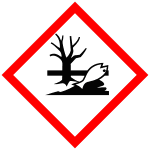
Hazardous to the aquatic environment
Signal word
WarningH Phrases
-
H302 : Harmful if swallowed
Acute Tox. (Cat. 4 *) : Acute toxicity
-
H317 : May cause an allergic skin reaction
Skin Sens. (Cat. 1) : Respiratory/skin sensitization
-
H400 : Very toxic to aquatic life
Aquatic Acute (Cat. 1) : Hazardous to the aquatic environment
-
H410 : Very toxic to aquatic life with long lasting effects
Aquatic Chronic (Cat. 1) : Hazardous to the aquatic environment
Labelling
| Concentration | Labelling |
|---|---|
| C >= 2,5 % | N; R50-53 |
| 0,25 % <= C < 2,5 % | N; R51-53 |
| 0,025 % <= C < 0,25 % | R52-53 |
| M=10 |
Specific health risks
Carcinogens (other sources) ?
Substances classified as carcinogens or mutagens Category 3 under the Dangerous Preparations Directive criteria (pre-CLP). Substances with limited evidence or indications of carcinogenicity or mutagenicity.
According to IARC ?
Substances classified as carcinogens or mutagens Category 2 under the CLP Regulation (GHS), bearing H351 and/or H341 phrases. These are substances suspected of causing cancer or heritable genetic mutations in humans.
Occupational Exposure Limits (OEL) ?
Daily exposure limit values (VLA-ED) published by the Spanish National Institute of Safety and Health at Work (INSST). They represent the average concentration of a chemical agent in the worker's breathing zone, measured or calculated in a time-weighted manner for an 8-hour daily working period. (https://www.insst.es/valores-limites-de-exposicion)
Biological Exposure Indices (BEI) ?
Biological limit values (VLB) published by the Spanish National Institute of Safety and Health at Work (INSST). Reference values for assessing the risk of chemical agents by measuring them or their metabolites in biological matrices (blood, urine, exhaled air) of exposed workers.
Restriction/prohibition regulations
REACH sensitisers ?
Substances identified as respiratory or skin sensitisers under the REACH Regulation. Includes substances that, without necessarily having a CLP classification, have been assessed by ECHA as potentially allergenic in occupational exposure contexts.
ListMajor accident hazards (Seveso) ?
Hazardous substances listed in Annex I of the Seveso III Directive (Directive 2012/18/EU), transposed in Spain by Royal Decree 840/2015. Their presence in industrial establishments in quantities equal to or above established thresholds triggers obligations to implement major accident risk control measures.
ListSubstances under PACT evaluation ?
Substances under active regulatory monitoring through ECHA's PACT (Public Activities Coordination Tool). Allows tracking which regulatory authorities are examining a substance and what potential regulatory actions are being considered (restriction, SVHC identification, harmonised classification, etc.).