RISCTOX Database
Search and consult detailed information about specific chemical substances.
Search other substances
Identification
- Name:
- sodium chlorate
- CAS:
- 7775-09-9
- EC/EINECS:
- 231-887-4
- Molecular Formula:
- ClHO3.Na
- International Chemical Safety Card (ICSC):
- 1117
- Uses:
- pesticide
CLASSIFICATION AND LABELLING (Regulation 1272/2008)
Symbols
-
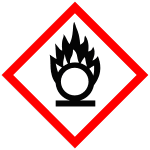
Oxidising gases
-
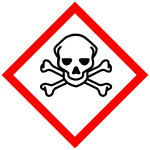
Acute toxicity (oral, dermal, inhalation)
Signal word
DangerH Phrases
-
H301 : Toxic if swallowed
Acute Tox. (Cat. 3) : Acute toxicity
-
H271 : May cause fire or explosion; strong oxidizer
Ox. Sol. (Cat. 1) : Oxidising solid
Labelling
| Concentration | Labelling |
|---|---|
| oral | ATE=100 mg/kg bw' |
Environmental regulations
LPCIC (EPER)
Priority substances and specific pollutants within the EU water policy framework, established by the Water Framework Directive (2000/60/EC) and the Priority Substances Directive (2008/105/EC and amendments). Substances posing significant risk to European surface waters and subject to Environmental Quality Standards (EQS).
Restriction/prohibition regulations
Major accident hazards (Seveso) ?
Hazardous substances listed in Annex I of the Seveso III Directive (Directive 2012/18/EU), transposed in Spain by Royal Decree 840/2015. Their presence in industrial establishments in quantities equal to or above established thresholds triggers obligations to implement major accident risk control measures.
ListBanned biocides ?
Active substances whose approval for biocidal use has been denied or not renewed under Regulation (EU) No 528/2012 on biocidal products. They may not be placed on the market or used as active substances in biocidal products in the European Union.
Substances under PACT evaluation ?
Substances under active regulatory monitoring through ECHA's PACT (Public Activities Coordination Tool). Allows tracking which regulatory authorities are examining a substance and what potential regulatory actions are being considered (restriction, SVHC identification, harmonised classification, etc.).