RISCTOX Database
Search and consult detailed information about specific chemical substances.
Search other substances
Identification
- Name:
- 1H-Imidazole, 4-methyl-@4-methylimidazole
- CAS:
- 822-36-6
- EC/EINECS:
- 212-497-3
- Molecular Formula:
- C4-H6-N2
CLASSIFICATION AND LABELLING (Regulation 1272/2008)
Symbols
-
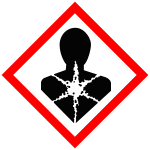
Respiratory sensitisation
H Phrases
-
H350 : May cause cancer
Carc. (Cat. 1B) : Carcinogenicity
-
H360Fd : May damage fertility. Suspected of damaging the unborn child.
Repr.,1B
Specific health risks
Carcinogens and mutagens (IARC) ?
Substances classified as carcinogens or mutagens Category 2 under the CLP Regulation (GHS), bearing H351 and/or H341 phrases. These are substances suspected of causing cancer or heritable genetic mutations in humans.
Carcinogens (other sources) ?
Substances classified as carcinogens or mutagens Category 3 under the Dangerous Preparations Directive criteria (pre-CLP). Substances with limited evidence or indications of carcinogenicity or mutagenicity.
According to IARC ?
Substances classified by the International Agency for Research on Cancer (IARC/WHO) according to their evidence of carcinogenicity in humans. Groups range from 1 (proven human carcinogen) to 4 (probably not carcinogenic to humans). The IARC classification is an international reference in occupational and environmental health.
Neurotoxic substances ?
Prohibited for pregnant workers
Substances prohibited for pregnant workers
ListRestriction/prohibition regulations
Substances under PACT evaluation ?
Substances under active regulatory monitoring through ECHA's PACT (Public Activities Coordination Tool). Allows tracking which regulatory authorities are examining a substance and what potential regulatory actions are being considered (restriction, SVHC identification, harmonised classification, etc.).