RISCTOX Database
Search and consult detailed information about specific chemical substances.
Search other substances
Identification
- Name:
- 2-Propenoic acid, 2-methyl-, (1-methylethylidene)bis[4,1-phenyleneoxy(2-hydroxy-3,1-propanediyl)] ester@(1-methylethylidene)bis[4,1-phenyleneoxy(2-hydroxy-3,1-propanediyl)] bismethacrylate
- Name (English):
- 2-Propenoic acid, 2-methyl-, (1-methylethylidene)bis[4,1-phenyleneoxy(2-hydroxy-3,1-propanediyl)] ester@(1-methylethylidene)bis[4,1-phenyleneoxy(2-hydroxy-3,1-propanediyl)] bismethacrylate
- Synonyms:
-
- ACIDO 2-METIL-2-PROPENOICO, (1-METILETILIDENO)bis[4,1-FENILENOOXI(2-HIDROXI-3,1-PROPANODIIL)] ESTER
- BISFENOL A-GLICIDIL METACRILATO
- BRN 2316426
- bis-GMA
- bisFENOL A GLICIDILMETACRILATO
- bisFENOL A-DIGLICIDIL-DIMETIL ACRILATO
- bisFENOL(A)GLICIDILMETACRILATO
- NUPOL 1629
- NUPOL 46-4005
- (1-METILETILIDENO)bis(4,1-FENILENOOXI(2-HIDROXI-3,1-PROPANODIIL)) bisMETACRILATO
- bisMETACRILATO DE (1-METILETILIDEN)bis[4,1-FENILENXI(2-HIDROXI-3,1-PROPANODIILO)]
- CAS:
- 1565-94-2
- EC/EINECS:
- 216-367-7
- Molecular Formula:
- C29-H36-O8
CLASSIFICATION AND LABELLING (Regulation 1272/2008)
Symbols
-
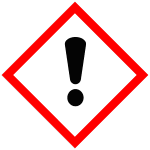
Acute toxicity (oral, dermal, inhalation
H Phrases
-
H319 : Causes serious eye irritation
Eye Irrit. (Cat. 2) : Serious eye damage/eye irritation
-
H335 : May cause respiratory irritation
STOT SE (Cat. 3) : Specific target organ toxicity - single exposure
-
H315 : Causes skin irritation
Skin Irrit. (Cat. 2) : Skin corrosion/irritation
Notes
- R.1272-Note A
Labelling
| Concentration | Labelling |
|---|---|
| C >= 10 % | STOT única, 3; H335 |
Specific environmental risks
Hazardous water substances (Germany) ?
Substances classified with chronic aquatic toxicity under the CLP Regulation (H410–H413 phrases, Aquatic Chronic categories 1 to 4). They pose a long-term hazard to aquatic organisms, even at low concentrations and through prolonged exposure.
Restriction/prohibition regulations
Substances under evaluation. PACT ?
Substances under active regulatory monitoring through ECHA's PACT (Public Activities Coordination Tool). Allows tracking which regulatory authorities are examining a substance and what potential regulatory actions are being considered (restriction, SVHC identification, harmonised classification, etc.).