RISCTOX Database
Search and consult detailed information about specific chemical substances.
Search other substances
Identification
- Name:
- 4,5-dichloro-2-n-octyl-4-isothiazolin-3-on; 4,5-dichloro-2-n-octyl-3(2H)-isothiazolone @4,5-dichloro-2-octyl-2H-isothiazol-3-one
- Synonyms:
-
- 4,5-DICLORO-2-N-OCTIL-4-ISOTIAZOLIN-3-ON
- 4,5-DICLORO-2-N-OCTIL-3(2H)-ISOTIAZOLONA
- DCOI
- CAS:
- 64359-81-5
- EC/EINECS:
- 264-843-8
- Molecular Formula:
- C11H17Cl2NOS
- Uses:
- biocide antifouling microbiocidal
Black list
Substances particularly hazardous to the environment or health
CLASSIFICATION AND LABELLING (Regulation 1272/2008)
Symbols
-

Corrosive to metals
-
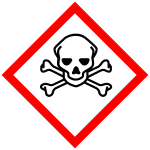
Acute toxicity (oral, dermal, inhalation)
-

Hazardous to the aquatic environment
H Phrases
-
H330 : Fatal if inhaled
Acute Tox. (Cat. 2) : Acute toxicity
-
H302 : Harmful if swallowed
Acute Tox. (Cat. 4) : Acute toxicity
-
H314 : Causes severe skin burns and eye damage
Skin Corr. (Cat. 1) : Skin corrosion/irritation
-
H318 : Causes serious eye damage
Eye Dam. (Cat. 1) : Serious eye damage/eye irritation
-
H317 : May cause an allergic skin reaction
Skin Sens. (Cat. 1A) : Respiratory/skin sensitization
-
H400 : Very toxic to aquatic life
Acuático agudo, 1
-
H410 : Very toxic to aquatic life with long lasting effects
Acuático crónico, 1
-
EUH071
Labelling
| Concentration | Labelling |
|---|---|
| ATE= 0,16 mg/L | Inhalation (dusts or mists) |
| ATE= 567 mg/kg bw | Oral |
| 0,025%≤ C<5% | Skin Irrit.2; H315 |
| 0,025%≤ C<3% | Eye Irrit. 2; H319 |
| C ≥ 0,0015% | Skin Sens. 1A; H317 |
| M= 100 | |
| M= 100' |
Specific health risks
Specific environmental risks
Hazardous water substances (Germany) ?
Substances classified with chronic aquatic toxicity under the CLP Regulation (H410–H413 phrases, Aquatic Chronic categories 1 to 4). They pose a long-term hazard to aquatic organisms, even at low concentrations and through prolonged exposure.
Restriction/prohibition regulations
Banned biocides ?
Active substances whose approval for biocidal use has been denied or not renewed under Regulation (EU) No 528/2012 on biocidal products. They may not be placed on the market or used as active substances in biocidal products in the European Union.
Substances under PACT evaluation ?
Substances under active regulatory monitoring through ECHA's PACT (Public Activities Coordination Tool). Allows tracking which regulatory authorities are examining a substance and what potential regulatory actions are being considered (restriction, SVHC identification, harmonised classification, etc.).