RISCTOX Database
Search and consult detailed information about specific chemical substances.
Search other substances
Identification
- Name:
- chloroform
- Synonyms:
-
- tricloruro de metilo
- triclorometano
- CAS:
- 67-66-3
- EC/EINECS:
- 200-663-8
- Molecular Formula:
- CHCl3
- International Chemical Safety Card (ICSC):
- 0027
- Uses:
- adhesive degreaser solvent cleaner fumigant
CLASSIFICATION AND LABELLING (Regulation 1272/2008)
Symbols
-
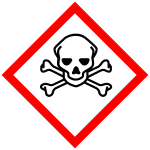
Acute toxicity (oral, dermal, inhalation)
-
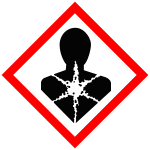
Respiratory sensitisation
H Phrases
-
H351 : Suspected of causing cancer
Carc. (Cat. 2) : Carcinogenicity
-
H361d : Suspected of damaging the unborn child.
Repr. (Cat. 2) : Reproductive toxicity
-
H331 : Toxic if inhaled
Acute Tox. (Cat. 3) : Acute toxicity
-
H302 : Harmful if swallowed
Acute Tox. (Cat. 4) : Acute toxicity
-
H372 : Causes damage to organs through prolonged or repeated exposure
STOT RE 1
-
H319 : Causes serious eye irritation
Eye Irrit. (Cat. 2) : Serious eye damage/eye irritation
-
H315 : Causes skin irritation
Skin Irrit. (Cat. 2) : Skin corrosion/irritation
Specific health risks
As per IARC ?
Substances classified by the International Agency for Research on Cancer (IARC/WHO) according to their evidence of carcinogenicity in humans. Groups range from 1 (proven human carcinogen) to 4 (probably not carcinogenic to humans). The IARC classification is an international reference in occupational and environmental health.
As per other sources
List generated from dn_risc_sustancias_cancer_otras
Carcinogens and mutagens (IARC) ?
Substances classified as carcinogens or mutagens Category 2 under the CLP Regulation (GHS), bearing H351 and/or H341 phrases. These are substances suspected of causing cancer or heritable genetic mutations in humans.
Carcinogens (other sources) ?
Substances classified as carcinogens or mutagens Category 3 under the Dangerous Preparations Directive criteria (pre-CLP). Substances with limited evidence or indications of carcinogenicity or mutagenicity.
Neurotoxic substances ?
Occupational Exposure Limits (OEL) ?
Daily exposure limit values (VLA-ED) published by the Spanish National Institute of Safety and Health at Work (INSST). They represent the average concentration of a chemical agent in the worker's breathing zone, measured or calculated in a time-weighted manner for an 8-hour daily working period.
Specific environmental risks
Aquatic toxicity (Water Framework Directive) ?
Substances classified with acute aquatic toxicity under the CLP Regulation (H400 phrase, Aquatic Acute 1). They present an immediate hazard to aquatic organisms, and their use or discharge can cause rapid damage to aquatic ecosystems.
ListAtmospheric emissions ?
Substances subject to atmospheric emission limitations under the Industrial Emissions Directive (2010/75/EU) and its Spanish transposition. Includes pollutants regulated in industrial installation emission permits and best available technique reference documents (BAT/BREF).
ListVolatile organic compounds ?
Volatile Organic Compounds (VOCs) regulated by Directive 1999/13/EC on the limitation of VOC emissions from certain activities, and by Royal Decrees 117/2003 and 227/2006. Substances contributing to tropospheric ozone formation that are subject to emission limits in industrial activities.
ListEnvironmental regulations
LPCIC (EPER)
Priority substances and specific pollutants within the EU water policy framework, established by the Water Framework Directive (2000/60/EC) and the Priority Substances Directive (2008/105/EC and amendments). Substances posing significant risk to European surface waters and subject to Environmental Quality Standards (EQS).
Restriction/prohibition regulations
Restricted substances REACH ?
Substances listed in Annex XVII of the REACH Regulation (EC) No 1907/2006, subject to restrictions on their manufacture, placing on the market or use. Restrictions may be total or partial, limiting specific applications, maximum concentrations or user groups.
Limitations: Without prejudice to the other parts of this Annex, the following shall apply to entries 32 to 38. 1. Shall not be placed on the market, or used, — as substances, — as constituents of other substances, or in mixtures in concentrations equal to or greater than 0,1 % by weight, where the substance or mixture is intended for supply to the general public and/or is intended for diffusive applications such as in surface cleaning and cleaning of fabrics. 2. Without prejudice to the application of other Community provisions on the classification, packaging and labelling of substances and mixtures, suppliers shall ensure before the placing on the market that the packaging of such substances and mixtures containing them in concentrations equal to or greater than 0,1 % by weight is visibly, legibly and indelibly marked as follows: ‘For use in industrial installations only’. By way of derogation this provision shall not apply to: (a) medicinal or veterinary products as defined by Directive 2001/82/EC and Directive 2001/83/EC; (b) cosmetic products as defined by Directive 76/768/EEC.
Source: Regulation 1907/2006 (REACH). Annex XVII
Substances under evaluation. PACT ?
Substances under active regulatory monitoring through ECHA's PACT (Public Activities Coordination Tool). Allows tracking which regulatory authorities are examining a substance and what potential regulatory actions are being considered (restriction, SVHC identification, harmonised classification, etc.).