

RISCTOX Database
Search and consult detailed information about specific chemical substances.
Search other substances
Identification
- Name:
- dieldrin@1,2,3,4,10,10-Hexachloro-6,7-epoxy-1,4,4a,5,6,7,8,8a-octahydro-1,4-endo,exo-5,8-dimethanonaphthalene
- Synonyms:
-
- dieldrina (ISO)
- dieldrin
- CAS:
- 60-57-1
- EC/EINECS:
- 200-484-5
- Molecular Formula:
- C12H8Cl6O
- International Chemical Safety Card (ICSC):
- 0787
- Uses:
- biocide insecticide pesticide pesticide cutting fluid
Black list
Substances particularly hazardous to the environment or health
CLASSIFICATION AND LABELLING (Regulation 1272/2008)
Symbols
-
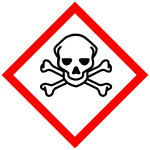
Acute toxicity (oral, dermal, inhalation)
-
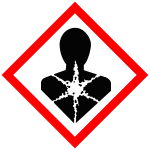
Respiratory sensitisation
-
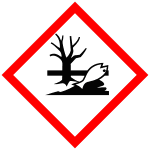
Hazardous to the aquatic environment
Signal word
DangerH Phrases
-
H310 : Fatal in contact with skin
Acute Tox. (Cat. 1) : Acute toxicity
-
H301 : Toxic if swallowed
Acute Tox. (Cat. 3 *) : Acute toxicity
-
H351 : Suspected of causing cancer
Carc. (Cat. 2) : Carcinogenicity
-
H372 : Causes damage to organs through prolonged or repeated exposure
STOT RE (Cat. 1) : Specific target organ toxicity - repeated exposure
-
H400 : Very toxic to aquatic life
Aquatic Acute (Cat. 1) : Hazardous to the aquatic environment
-
H410 : Very toxic to aquatic life with long lasting effects
Aquatic Chronic (Cat. 1) : Hazardous to the aquatic environment
Specific health risks
Carcinogens (other sources) ?
Substances classified as carcinogens or mutagens Category 3 under the Dangerous Preparations Directive criteria (pre-CLP). Substances with limited evidence or indications of carcinogenicity or mutagenicity.
G-A3, CP
ACGIH, CP65
Occupational Exposure Limits (OEL) ?
Daily exposure limit values (VLA-ED) published by the Spanish National Institute of Safety and Health at Work (INSST). They represent the average concentration of a chemical agent in the worker's breathing zone, measured or calculated in a time-weighted manner for an 8-hour daily working period.
VLA-ED: 0,1 mg/m3
Notas: ae; vía dérmica; FIV, s
Endocrine disruptors ?
Neurotoxic substances ?
According to IARC ?
Substances classified as carcinogens or mutagens Category 2 under the CLP Regulation (GHS), bearing H351 and/or H341 phrases. These are substances suspected of causing cancer or heritable genetic mutations in humans.
Grupo 3
(VOL. 5, SUPL. 7; 1987)
Specific environmental risks
Persistent bioaccumulative and toxic ?
Substances identified as Persistent, Bioaccumulative and Toxic (PBT) according to the criteria of Annex XIII of the REACH Regulation. They pose a special risk of accumulation in the environment and in the food chain.
OSPAR
http://www.ospar.org/v_substances/get_page.asp?v1=60571.xls
Aquatic toxicity (Water Framework Directive) ?
Substances classified with acute aquatic toxicity under the CLP Regulation (H400 phrase, Aquatic Acute 1). They present an immediate hazard to aquatic organisms, and their use or discharge can cause rapid damage to aquatic ecosystems.
ListSoil contaminants ?
Substances identified as soil contaminants under Spanish and European environmental regulations. Includes substances capable of persisting in soil, bioaccumulating in the terrestrial food chain, and affecting soil ecosystems and groundwater.
ListPersistent organic pollutants ?
Substances identified as persistent organic pollutants
Annex I, part A
Annex IV
Annex V, part 2
https://chem.echa.europa.eu/activity-lists/popsProcess
Atmospheric emissions ?
Substances subject to atmospheric emission limitations under the Industrial Emissions Directive (2010/75/EU) and its Spanish transposition. Includes pollutants regulated in industrial installation emission permits and best available technique reference documents (BAT/BREF).
ListEnvironmental regulations
LPCIC (EPER)
Priority substances and specific pollutants within the EU water policy framework, established by the Water Framework Directive (2000/60/EC) and the Priority Substances Directive (2008/105/EC and amendments). Substances posing significant risk to European surface waters and subject to Environmental Quality Standards (EQS).
false
false
true
Restriction/prohibition regulations
Major accident hazards (Seveso) ?
Hazardous substances listed in Annex I of the Seveso III Directive (Directive 2012/18/EU), transposed in Spain by Royal Decree 840/2015. Their presence in industrial establishments in quantities equal to or above established thresholds triggers obligations to implement major accident risk control measures.
ListSubstances under PACT evaluation ?
Substances under active regulatory monitoring through ECHA's PACT (Public Activities Coordination Tool). Allows tracking which regulatory authorities are examining a substance and what potential regulatory actions are being considered (restriction, SVHC identification, harmonised classification, etc.).