
RISCTOX Database
Search and consult detailed information about specific chemical substances.
Search other substances
Identification
- Name:
- α-chlorotoluene
- Name (English):
- α-chlorotoluene
- Synonyms:
-
- cloruro de bencilo
- bencil-cloruro
- alfa-clorotolueno
- CAS:
- 100-44-7
- EC/EINECS:
- 202-853-6
- Molecular Formula:
- C7H7Cl
- International Chemical Safety Card (ICSC):
- 0016
- Uses:
- solvent
Black list
Substances particularly hazardous to the environment or health
CLASSIFICATION AND LABELLING (Regulation 1272/2008)
Symbols
-
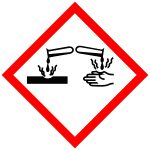
Corrosive to metals
-
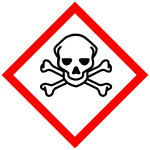
Acute toxicity (oral, dermal, inhalation)
-
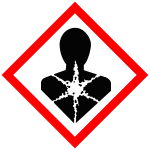
Respiratory sensitisation
Signal word
DangerH Phrases
-
H350 : May cause cancer
Carc. (Cat. 1B) : Carcinogenicity
-
H331 : Toxic if inhaled
Acute Tox. (Cat. 3 *) : Acute toxicity
-
H302 : Harmful if swallowed
Acute Tox. (Cat. 4 *) : Acute toxicity
-
H335 : May cause respiratory irritation
STOT SE (Cat. 3) : Specific target organ toxicity - single exposure
-
H315 : Causes skin irritation
Skin Irrit. (Cat. 2) : Skin corrosion/irritation
-
H318 : Causes serious eye damage
Eye Dam. (Cat. 1) : Serious eye damage/eye irritation
-
H373 : May cause damage to organs through prolonged or repeated exposure
STOT RE (Cat. 2 *) : Specific target organ toxicity - repeated exposure
Specific health risks
Carcinogens (other sources) ?
Substances classified as carcinogens or mutagens Category 3 under the Dangerous Preparations Directive criteria (pre-CLP). Substances with limited evidence or indications of carcinogenicity or mutagenicity.
Neurotoxic substances ?
According to IARC ?
Substances classified as carcinogens or mutagens Category 2 under the CLP Regulation (GHS), bearing H351 and/or H341 phrases. These are substances suspected of causing cancer or heritable genetic mutations in humans.
Occupational Exposure Limits (OEL) ?
Daily exposure limit values (VLA-ED) published by the Spanish National Institute of Safety and Health at Work (INSST). They represent the average concentration of a chemical agent in the worker's breathing zone, measured or calculated in a time-weighted manner for an 8-hour daily working period. (https://www.insst.es/valores-limites-de-exposicion)
Specific environmental risks
Atmospheric emissions ?
Substances subject to atmospheric emission limitations under the Industrial Emissions Directive (2010/75/EU) and its Spanish transposition. Includes pollutants regulated in industrial installation emission permits and best available technique reference documents (BAT/BREF).
ListRestriction/prohibition regulations
Restricted substances under REACH ?
Substances listed in Annex XVII of the REACH Regulation (EC) No 1907/2006, subject to restrictions on their manufacture, placing on the market or use. Restrictions may be total or partial, limiting specific applications, maximum concentrations or user groups.
(a) clothing or related accessories;
(b) textiles other than clothing which, under normal or reasonably foreseeable conditions of use, come into contact with human skin to an extent similar to clothing;
(c) footwear;
if the clothing, related accessory, textile other than clothing or footwear is for use by consumers and the substance is present in a concentration, measured in homogeneous material, equal to or greater than that specified for that substance in Appendix 12.
2. By way of derogation, in relation to the placing on the market of formaldehyde [CAS No 50-00-0] in jackets, coats or upholstery, the relevant concentration for the purposes of paragraph 1 shall be 300 mg/kg during the period between 1 November 2020 and 1 November 2023. The concentration specified in Appendix 12 shall apply thereafter.
3. Paragraph 1 shall not apply to:
(a) clothing, related accessories or footwear, or parts of clothing, related accessories or footwear, made exclusively of natural leather, fur or hide;
(b) non-textile fasteners and non-textile decorative attachments;
(c) second-hand clothing, related accessories, textiles other than clothing or footwear
(d) wall-to-wall carpets and textile floor coverings for indoor use, rugs and runners.
4. Paragraph 1 shall not apply to clothing, related accessories, textiles other than clothing, or footwear within the scope of Regulation (EU) 2016/425 of the European Parliament and of the Council1 or Regulation (EU) 2017/745 of the European Parliament and of the Council2.
5. Paragraph 1(b) shall not apply to disposable textiles. ‘Disposable textiles’ means textiles
that are designed to be used only once or for a limited time and are not intended for subsequent use for the same or a similar purpose.
6. Paragraphs 1 and 2 shall apply without prejudice to the application of any stricter restrictions set out in this Annex or in other applicable Union legislation.
7. The Commission shall review the exemption in paragraph 3(d) and, if appropriate, modify
that point accordingly.
Major accident hazards (Seveso) ?
Hazardous substances listed in Annex I of the Seveso III Directive (Directive 2012/18/EU), transposed in Spain by Royal Decree 840/2015. Their presence in industrial establishments in quantities equal to or above established thresholds triggers obligations to implement major accident risk control measures.
ListSubstances under PACT evaluation ?
Substances under active regulatory monitoring through ECHA's PACT (Public Activities Coordination Tool). Allows tracking which regulatory authorities are examining a substance and what potential regulatory actions are being considered (restriction, SVHC identification, harmonised classification, etc.).