RISCTOX Database
Search and consult detailed information about specific chemical substances.
Search other substances
Identification
- Name:
- dichloromethane@DCM@
- Synonyms:
-
- DCM
- cloruro de metileno
- dicloruro de metilo
- CAS:
- 75-09-2
- EC/EINECS:
- 200-838-9
- Molecular Formula:
- CH2Cl2
- International Chemical Safety Card (ICSC):
- 0058
- Uses:
- adhesive solvent stripper cleaner repellent
CLASSIFICATION AND LABELLING (Regulation 1272/2008)
Symbols
-
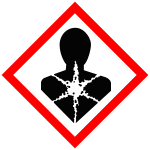
Respiratory sensitisation
H Phrases
-
H351 : Suspected of causing cancer
Carc. (Cat. 2) : Carcinogenicity
Specific health risks
As per IARC ?
Substances classified by the International Agency for Research on Cancer (IARC/WHO) according to their evidence of carcinogenicity in humans. Groups range from 1 (proven human carcinogen) to 4 (probably not carcinogenic to humans). The IARC classification is an international reference in occupational and environmental health.
As per other sources
Carcinogens and mutagens (IARC) ?
Substances classified as carcinogens or mutagens Category 2 under the CLP Regulation (GHS), bearing H351 and/or H341 phrases. These are substances suspected of causing cancer or heritable genetic mutations in humans.
Carcinogens (other sources) ?
Substances classified as carcinogens or mutagens Category 3 under the Dangerous Preparations Directive criteria (pre-CLP). Substances with limited evidence or indications of carcinogenicity or mutagenicity.
Breast cancer ?
Substances classified with H362 phrase (may cause harm to breast-fed children). Toxic for reproduction due to effects on lactation or due to transmissibility through breast milk.
Neurotoxic substances ?
Substances with neurotoxic effects
Occupational Exposure Limits (OEL) ?
Daily exposure limit values (VLA-ED) published by the Spanish National Institute of Safety and Health at Work (INSST). They represent the average concentration of a chemical agent in the worker's breathing zone, measured or calculated in a time-weighted manner for an 8-hour daily working period.
Biological Exposure Indices (BEI) ?
Biological limit values (VLB) published by the Spanish National Institute of Safety and Health at Work (INSST). Reference values for assessing the risk of chemical agents by measuring them or their metabolites in biological matrices (blood, urine, exhaled air) of exposed workers.
Specific environmental risks
Aquatic toxicity (Water Framework Directive) ?
Substances classified with acute aquatic toxicity under the CLP Regulation (H400 phrase, Aquatic Acute 1). They present an immediate hazard to aquatic organisms, and their use or discharge can cause rapid damage to aquatic ecosystems.
ListAtmospheric emissions ?
Substances subject to atmospheric emission limitations under the Industrial Emissions Directive (2010/75/EU) and its Spanish transposition. Includes pollutants regulated in industrial installation emission permits and best available technique reference documents (BAT/BREF).
ListEnvironmental regulations
LPCIC (EPER)
Priority substances and specific pollutants within the EU water policy framework, established by the Water Framework Directive (2000/60/EC) and the Priority Substances Directive (2008/105/EC and amendments). Substances posing significant risk to European surface waters and subject to Environmental Quality Standards (EQS).
EPER Water ?
Substances from List 1 of Annex III of the IPPC Directive (integrated into the Industrial Emissions Directive 2010/75/EU). Atmospheric pollutants —including SO₂, NOx, heavy metals and organic compounds— that must be taken into account when setting emission limit values for IPPC installations.
Restriction/prohibition regulations
Restricted substances REACH ?
Substances listed in Annex XVII of the REACH Regulation (EC) No 1907/2006, subject to restrictions on their manufacture, placing on the market or use. Restrictions may be total or partial, limiting specific applications, maximum concentrations or user groups.
Limitations: 1. Paint strippers containing dichloromethane in a concentration equal to or greater than 0,1 % by weight shall not be: (a) placed on the market for the first time for supply to the general public or to professionals after 6 December 2010; (b) placed on the market for supply to the general public or to professionals after 6 December 2011; (c) used by professionals after 6 June 2012. For the purposes of this entry: (i) ‘professional’ means any natural or legal person, including workers and self-employed workers undertaking paint stripping in the course of their professional activity outside an industrial installation; (ii) ‘industrial installation’ means a facility used for paint stripping activities. 2. By way of derogation from paragraph 1, Member States may allow on their territories and for certain activities the use, by specifically trained professionals, of paint strippers containing dichloromethane and may allow the placing on the market of such paint strippers for supply to those professionals. Member States making use of this derogation shall define appropriate provisions for the protection of the health and safety of those professionals using paint strippers containing dichloromethane and shall inform the Commission thereof. Those provisions shall include a requirement that a professional shall hold a certificate that is accepted by the Member State in which that professional operates, or provide other documentary evidence to that effect, or be otherwise approved by that Member State, so as to demonstrate proper training and competence to safely use paint strippers containing dichloromethane. The Commission shall prepare a list of the Member States which have made use of the derogation in this paragraph and make it publicly available over the Internet. 3. A professional benefiting from the derogation referred to in paragraph 2 shall operate only in Member States which have made use of that derogation. The training referred to in paragraph 2 shall cover as a minimum: (a) awareness, evaluation and management of risks to health, including information on existing substitutes or processes, which under their conditions of use are less hazardous to the health and safety of workers; (b) use of adequate ventilation; (c) use of appropriate personal protective equipment that complies with Directive 89/686/EEC. Employers and self-employed workers shall preferably replace dichloromethane with a chemical agent or process which, under its conditions of use, presents no risk, or a lower risk, to the health and safety of workers. Professional shall apply all relevant safety measures in practice, including the use of personal protective equipment. 4. Without prejudice to other Community legislation on workers protection, paint strippers containing dichloromethane in concentrations equal to or greater than 0,1 % by weight may be used in industrial installations only if the following minimum conditions are met: (a) effective ventilation in all processing areas, in particular for the wet processing and the drying of stripped articles: local exhaust ventilation at strip tanks supplemented by forced ventilation in those areas, so as to minimise exposure and to ensure compliance, where technically feasible, with relevant occupational exposure limits; (b) measures to minimise evaporation from strip tanks comprising: lids for covering strip tanks except during loading and unloading; suitable loading and unloading arrangements for strip tanks; and wash tanks with water or brine to remove excess solvent after unloading; (c) measures for the safe handling of dichloromethane in strip tanks comprising: pumps and pipework for transferring paint stripper to and from strip tanks; and suitable arrangements for safe cleaning of tanks and removal of sludge; (d) personal protective equipment that complies with Directive 89/686/EEC comprising: suitable protective gloves, safety goggles and protective clothing; and appropriate respiratory protective equipment where compliance with relevant occupational exposure limits cannot be otherwise achieved; (e) adequate information, instruction and training for operators in the use of such equipment. 5. Without prejudice to other Community provisions concerning the classification, labelling and packaging of substances and mixtures, by 6 December 2011 paint strippers containing dichloromethane in a concentration equal to or greater than 0,1 % by weight shall be visibly, legibly and indelibly marked as follows: ‘Restricted to industrial use and to professionals approved in certain EU Member States — verify where use is allowed.’
Source: Regulation 1907/2006 (REACH). Annex XVII
Substances under evaluation. CoRAP ?
Substances included in the Community Rolling Action Plan (CoRAP) of the REACH Regulation. These are substances selected for evaluation by EU Member States due to indications of risk to human health or the environment, with the aim of clarifying whether regulatory action is warranted.
Substances under evaluation. PACT ?
Substances under active regulatory monitoring through ECHA's PACT (Public Activities Coordination Tool). Allows tracking which regulatory authorities are examining a substance and what potential regulatory actions are being considered (restriction, SVHC identification, harmonised classification, etc.).