


RISCTOX Database
Search and consult detailed information about specific chemical substances.
Search other substances
Identification
- Name:
- captan (ISO); 1,2,3,6- tetrahydro-N-(trichloromethylthio) phthalimide
- Synonyms:
-
- N-triclorometil-tio-4-ciclohexano-1,2-dicarboxamida
- Captano (ISO)
- 1,2,3,6-tetrahidro-N-(triclorometiltio)ftalimida
- CAS:
- 133-06-2
- EC/EINECS:
- 205-087-0
- Molecular Formula:
- C9H8Cl3NO2S
- International Chemical Safety Card (ICSC):
- 0120
- Uses:
- fungicide pesticide pesticide mold antifouling
Black list
Substances particularly hazardous to the environment or health
CLASSIFICATION AND LABELLING (Regulation 1272/2008)
Symbols
-
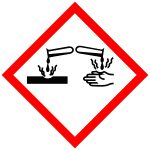
Corrosive to metals
-
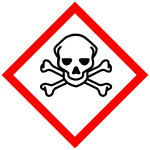
Acute toxicity (oral, dermal, inhalation)
-
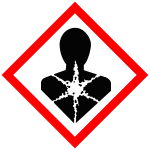
Respiratory sensitisation
-
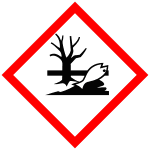
Hazardous to the aquatic environment
Signal word
DangerH Phrases
-
H351 : Suspected of causing cancer
Carc. (Cat. 2) : Carcinogenicity
-
H361f : Suspected of damaging fertility.
Repr.,2
-
H330 : Fatal if inhaled
Acute Tox. (Cat. 2) : Acute toxicity
-
H372 : Causes damage to organs through prolonged or repeated exposure
STOT RE (Cat. 1) : Specific target organ toxicity - repeated exposure
-
H318 : Causes serious eye damage
Eye Dam. (Cat. 1) : Serious eye damage/eye irritation
-
H317 : May cause an allergic skin reaction
Skin Sens. (Cat. 1A) : Respiratory/skin sensitization
-
H400 : Very toxic to aquatic life
Aquatic Acute (Cat. 1) : Hazardous to the aquatic environment
-
H410 : Very toxic to aquatic life with long lasting effects
Acuático crónico, 1
Labelling
| Concentration | Labelling |
|---|---|
| C >= 2,5 % | N; R50 |
| Inhalation | ATE=0.22 mg/L (dust or mist) |
| Skin sens.,1A; H317 | C≥0,001% |
| M=10 | |
| M= 10' |
Specific health risks
Carcinogens (other sources) ?
Substances classified as carcinogens or mutagens Category 3 under the Dangerous Preparations Directive criteria (pre-CLP). Substances with limited evidence or indications of carcinogenicity or mutagenicity.
According to IARC ?
Substances classified as carcinogens or mutagens Category 2 under the CLP Regulation (GHS), bearing H351 and/or H341 phrases. These are substances suspected of causing cancer or heritable genetic mutations in humans.
Occupational Exposure Limits (OEL) ?
Daily exposure limit values (VLA-ED) published by the Spanish National Institute of Safety and Health at Work (INSST). They represent the average concentration of a chemical agent in the worker's breathing zone, measured or calculated in a time-weighted manner for an 8-hour daily working period. (https://www.insst.es/valores-limites-de-exposicion)
Carcinogens and mutagens (Regulation 1272/2008) ?
Substances classified as carcinogenic or mutagenic under Regulation 1272/2008
ListSpecific environmental risks
Atmospheric emissions ?
Substances subject to atmospheric emission limitations under the Industrial Emissions Directive (2010/75/EU) and its Spanish transposition. Includes pollutants regulated in industrial installation emission permits and best available technique reference documents (BAT/BREF).
ListRestriction/prohibition regulations
Major accident hazards (Seveso) ?
Hazardous substances listed in Annex I of the Seveso III Directive (Directive 2012/18/EU), transposed in Spain by Royal Decree 840/2015. Their presence in industrial establishments in quantities equal to or above established thresholds triggers obligations to implement major accident risk control measures.
ListBanned biocides ?
Active substances whose approval for biocidal use has been denied or not renewed under Regulation (EU) No 528/2012 on biocidal products. They may not be placed on the market or used as active substances in biocidal products in the European Union.
Substances under PACT evaluation ?
Substances under active regulatory monitoring through ECHA's PACT (Public Activities Coordination Tool). Allows tracking which regulatory authorities are examining a substance and what potential regulatory actions are being considered (restriction, SVHC identification, harmonised classification, etc.).
Authorized Pesticide ?
Active substances approved for use in plant protection products (agricultural pesticides) in the European Union under Regulation (EC) No 1107/2009. Includes herbicides, fungicides, insecticides, acaricides and other crop protection agents with current European-level approval.